Will it make my rooms dark?
Almost never, and this is the thing people get wrong most often. The films that do the most work on heat are among the lightest ones we carry, because heat rejection comes from the coating rather than from how dark the film looks. Most people cannot tell a window has been filmed until they stand next to one that has not.
Will my houseplants be okay?
Yes. Plants need visible light, and almost none of them need ultraviolet, which is the part the film takes out. The one exception is a plant already struggling in a low light spot, and we will say so before we film that window rather than after.
Will it work on double pane glass?
On most of it, and most of what we install on is double pane. But it is not automatic. Some sealed units, particularly older ones and some low-e coatings, can be stressed by the wrong film to the point the glass cracks, and that is a repair nobody wants to be having. We check what you actually have during the survey and match the film to it. That check is a good part of why we come out rather than quoting blind.
Does it help in winter, or only summer?
Both, but not equally. Summer is where you feel it: the heat is turned away before it gets into the room. In winter a film slows some of the warmth escaping back out through the glass, which takes the edge off a cold room near a big window. Anyone who tells you film heats your house in winter is overselling it.
Will it look mirrored from inside?
No. Reflective films are one way in daylight: they mirror to the street and stay clear from where you are sitting. That reverses after dark once your lights are on and it is darker outside, which is worth knowing before you rely on one for a bedroom.
Can we stay in the house while you work?
Yes, and most people do. We work room by room and only need clear access to the glass and a metre or so in front of it. For an office or a storefront we work one elevation at a time and can come evenings or weekends if you would rather we were not there during your hours.
How do I clean the windows afterwards?
Any normal glass cleaner and a soft cloth, once it has cured. No ammonia, nothing abrasive, and never a blade. Give it thirty days before the first clean and after that treat it exactly like glass.
Why does it look hazy or bubbly at first?
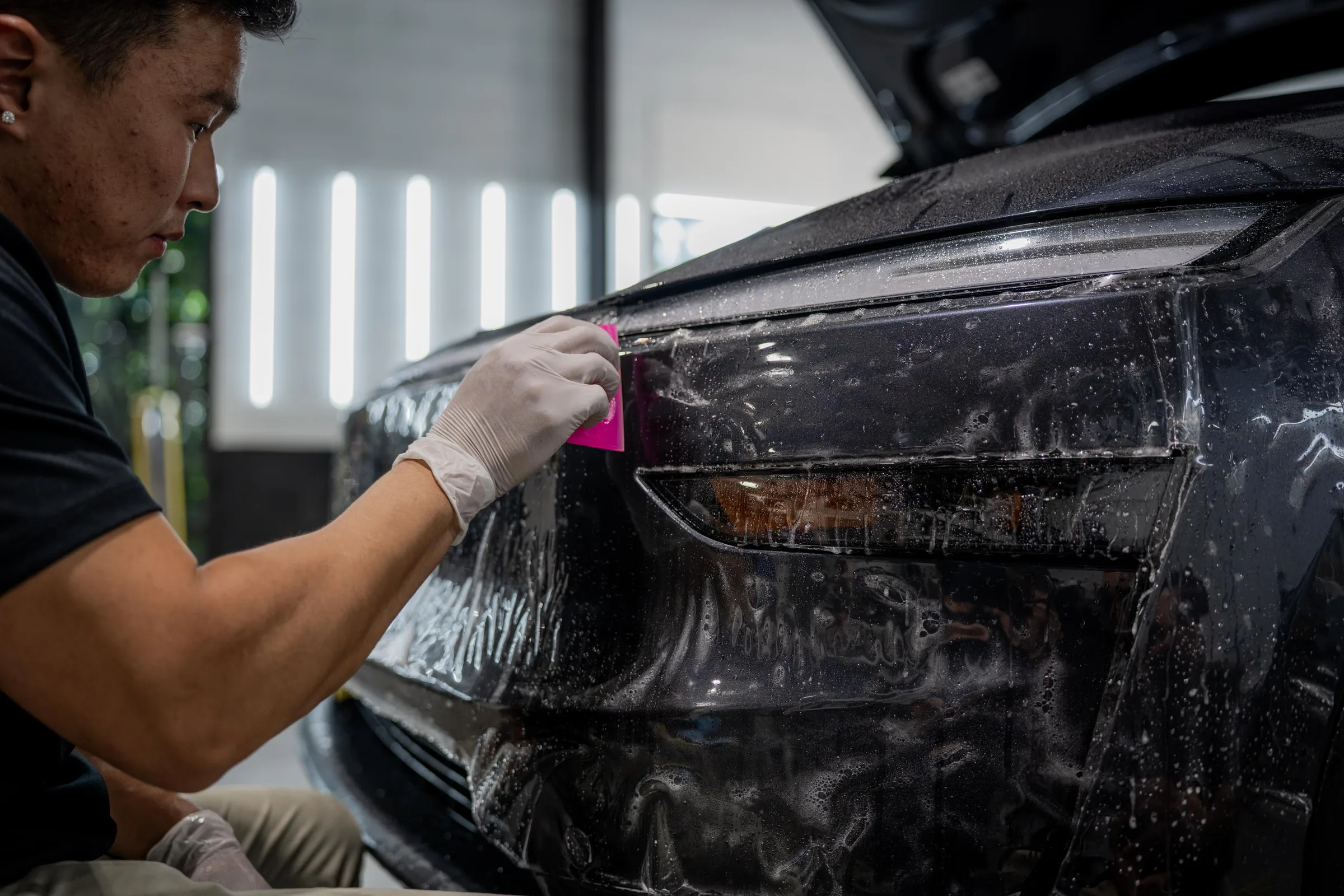
That is water still trapped between the film and the glass, and it is normal. It clears on its own as the film cures, usually over a few weeks, and faster on a sunny window than a shaded north facing one. If anything is still there after about thirty days, tell us.
Can it be taken off later?
Yes. Film is removable and the glass underneath is unchanged. It is worth having it done properly, because pulling it off dry is how adhesive gets left behind and turns a simple job into a long afternoon.